
Sanskrit is one of the oldest and most profound languages in the world. Often called Devabhāṣā—the language of the gods—Sanskrit is not just a means of communication, but a gateway to ancient knowledge, philosophy, science, and spirituality.
A Brief History of Sanskrit
Sanskrit originated in ancient India over 3,500 years ago. It is the language of the Vedas, Upanishads, Bhagavad Gita, Ramayana, and Mahabharata. Classical Sanskrit was standardized by the great grammarian Pāṇini, whose work Aṣṭādhyāyī is considered one of the most advanced grammatical systems ever created.
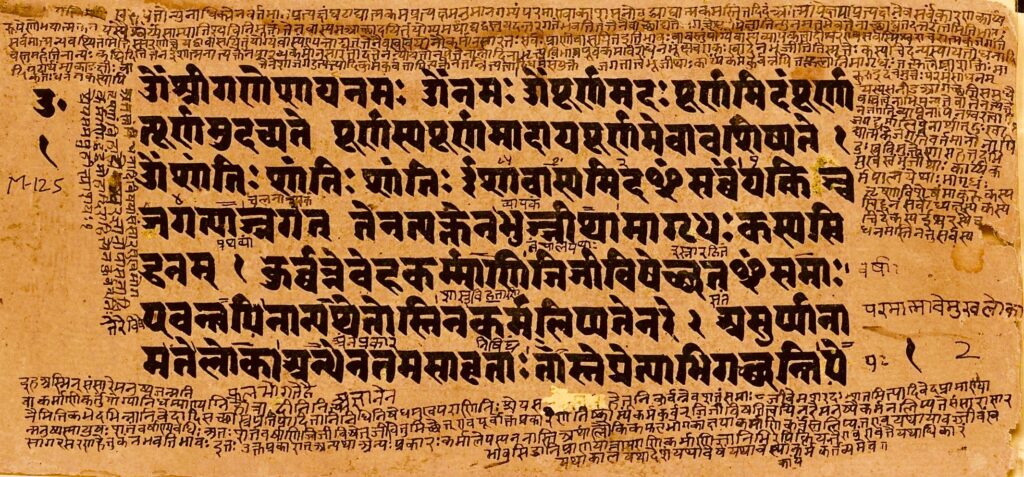
Isha upanishadas
Sanskrit originated in ancient India over 3,500 years ago. It is the language of the Vedas, Upanishads, Bhagavad Gita, Ramayana, and Mahabharata. Classical Sanskrit was standardized by the great grammarian Pāṇini, whose work Aṣṭādhyāyī is considered one of the most advanced grammatical systems ever created.
Brief History of Sanskrit
Why Sanskrit Is Unique
What sets Sanskrit apart is its precision and structure. Every word is formed logically, and its grammar follows mathematical rules. Because of this clarity, Sanskrit has often been praised as an ideal language for philosophy, logic, and even computer science.
Some unique features include:
- Highly systematic grammar
- Phonetic clarity (words are pronounced exactly as written)
- Rich vocabulary with deep meanings
- Ability to express complex ideas succinctly
A Language of Knowledge and Wisdom
Sanskrit is the language of some of humanity’s most profound texts:
- Vedas and Upanishads – spiritual and philosophical foundations
- Ramayana and Mahabharata – epic narratives rich in moral wisdom
- Bhagavad Gita – a timeless guide to life and duty
- Ayurveda and Yoga texts – ancient sciences of health and well-being
- Mathematics and Astronomy works – early concepts of zero, infinity, and planetary motion
These texts reveal that Sanskrit was not limited to religion—it was a language of science, logic, art, and governance.
Scientific Precision of Sanskrit
One of the most fascinating aspects of Sanskrit is its grammatical structure. It is rule-based, logical, and unambiguous, which is why many scholars and scientists have admired it.
Some modern researchers believe Sanskrit’s clarity makes it suitable for artificial intelligence, computational linguistics, and machine processing. Its structured syntax reduces ambiguity—something modern programming languages strive to achieve.One of the most fascinating aspects of Sanskrit is its grammatical structure. It is rule-based, logical, and unambiguous, which is why many scholars and scientists have admired it.
Some modern researchers believe Sanskrit’s clarity makes it suitable for artificial intelligence, computational linguistics, and machine processing. Its structured syntax reduces ambiguity—something modern programming languages strive to achieve.